India's manufacturing sector activities eased slightly in February but firms were upbeat as they responded to increased new work intakes by stepping up production and purchasing activities, a monthly survey said on Monday. The seasonally-adjusted IHS Markit India Manufacturing Purchasing Managers' Index (PMI) fell marginally to 57.5 in February from 57.7 in January, indicating that even though the pace of growth eased from January it remained sharp in the context of historical data. The headline figure for February remained above its long-run average of 53.6, the survey noted. In PMI parlance, a print above 50 means expansion while a score below 50 denotes contraction.

According to the IHS Markit India Business Outlook, predictions of softer activity growth underpin the downward revisions of profit outlook, subdued hiring plans and relatively muted capital expenditure.

With only a handful of models by a few manufacturers including Tata Nexon, MG ZS, Hyundai Kona, among others, the segment has remained under tapped.
The seasonally adjusted IHS Markit India Manufacturing Purchasing Managers' Index (PMI) fell from 58.9 in October to a three-month low of 56.3 in November, indicating that the manufacturing sector growth remained strong, despite losing traction.

IndusInd Bank was the top gainer in the Sensex pack, rising nearly 6 per cent, followed by Axis Bank, SBI, Maruti, Tech Mahindra and Reliance Industries. NSE Nifty surged 183.70 points to close at 17,166.90.

If one leaves aside 2016, when sales declined 4.68 per cent, the pace of growth in 2018 is the slowest in a decade, according to IHS Markit, a sales forecast and market research firm.

Services companies reported an increase in new work intakes, which they attributed to successful marketing efforts and strengthening demand.

New businesses have been secured from the public and private sectors, as well as domestic and international markets.
Manufacturers indicated that the ongoing relaxation of COVID-19 restrictions, better market conditions and improved demand helped them to secure new work in October.

The seasonally adjusted India Services Business Activity Index rose sharply from 34.2 in July to 41.8 in August, the highest since March, before the escalation of the pandemic.

Cars priced above Rs 25 lakh account for 1 per cent in India's 3 million-car market and the share has remained unchanged over the last five years.

India's services sector activity expanded at the second-fastest pace in more than a decade during November, driven by sustained rise in new work and improvement in market conditions, a monthly survey said on Friday. The seasonally adjusted India Services Business Activity Index was at 58.1 in November, fractionally down from 58.4 in October. The November figure points to the second-fastest rise in output since July 2011. For the fourth straight month, the services sector witnessed an expansion in output.

New business received by Indian manufacturers expanded at the fastest pace since February.

India's manufacturing sector activity strengthened in December, with manufacturers stepping up production and input buying amid efforts to rebuild their inventories following business closures earlier in the year, a monthly survey said on Monday. The seasonally adjusted IHS Markit India Manufacturing Purchasing Managers' Index (PMI) was at 56.4 in December, a tick higher than November's reading of 56.3 and above the critical 50 threshold for the fifth straight month. In PMI parlance, a print above 50 means expansion, while a score below that denotes contraction.
The country's manufacturing sector activity grew at the slowest rate in four months during March, hampered by softer rises in new business as international demand faltered owing to the coronavirus pandemic, a monthly survey said on Thursday. The headline seasonally adjusted IHS Markit India Manufacturing PMI fell to 51.8 in March, from 54.5 in February, signalling the slowest improvement in business conditions since November 2019. This is the 32nd consecutive month that the manufacturing PMI has remained above the 50-point mark.

Bolstered by improved domestic demand, India's services sector expanded for the fourth consecutive month in January as business activities quickened and rising business optimism is set to sustain the growth momentum, a monthly survey said on Wednesday. The seasonally-adjusted India Services Business Activity Index rose from 52.3 in December to 52.8 in January, pointing to a quicker expansion in output. The index was above the critical 50 mark that separates growth from contraction for the fourth month in a row during January.

This is the project to turn municipal and agri-waste into fuel sources like diesel, jet fuel, naptha and petroleum. It is called IH2.

Mercedes-Benz India, BMW India and Audi India have lined up over 50 new model launches as they seek to recoup previous year's loss in volumes, reports Shally Seth Mohile.

PMI increased from 52.0 in August to 56.8 in September -- highest since January 2012.
Indian service sector output broadly stabilised in September but remained in the contraction zone as incoming new business fell moderately due to the damaging impact of the pandemic on demand, leading to more job losses.

India's services sector activity surged to a seven-year high in January driven by sharp increase in new business orders, leading to job creation and business optimism amid favourable market conditions, a monthly survey said on Wednesday. The IHS Markit India Services Business Activity Index rose from 53.3 in December to 55.5 in January, signalling the strongest upturn in output in seven years.
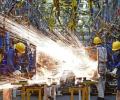
The country's manufacturing sector activity recorded another sharp deterioration in business conditions during May as new orders placed with producers continued to fall after April's record contraction, leading firms to cut jobs at the quickest pace on record, a monthly survey said on Monday.
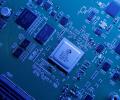
Input shortages and low inventories, according to Nomura, will likely lead to production cuts and delayed shipments in the September 2021 quarter.

Marking its quickest rise in over seven years, India's services sector activity expanded for the fifth successive month in February, tracking spike in business orders, renewed export demand and strengthening business confidence, a monthly survey showed on Wednesday. The IHS Markit India Services Business Activity Index rose from 55.5 in January to 57.5 in February. This is the fastest expansion in services output since January 2013.

'It says, we are not just an overseas player -- we are Kia India and here for good'

Cars and two-wheelers attract 28% GST and a cess in the range of 3-22%, taking the effective tax rate to up to 50%.

Higher exports will also drive up volumes, as the company seeks to avail of the benefits under the government's recently announced production linked incentive scheme.

In a dramatic turn of events, the erstwhile Indian Hockey Federation and newly-formed Hockey India decided to bury the hatchet and joined hands to bring the state associations -- both men's and women's into Hockey India's fold.

The main factor boosting production was a sustained rise in new work inflows.

According to data compiled by the World Bank, the UK's economy grew to $2.82 trillion and the French economy expanded to $2.78 trillion in 2018, against India's $2.73 trillion, showed the data.

Close to half a dozen more three-row premium mid-size models are expected to hit the road over the next two years.
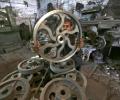
The coronavirus outbreak has brought a large part of the world's second-largest economy China to a standstill and its impact has been felt across industries.
India's services sector activity moderated further in January as new business rose at a noticeably slower rate amid the escalation of the pandemic, reintroduction of restrictions and inflationary pressures, a monthly survey said on Thursday. The seasonally adjusted India Services Business Activity Index fell to 51.5 in January, down from 55.5 in December, pointing to the slowest rate of expansion in the current six-month sequence of growth. For the sixth straight month, the services sector witnessed an expansion in output.

India's services sector activity expanded at the strongest pace in ten-and-a-half years in October, driven by a substantial upturn in business activity amid favourable demand conditions, a monthly survey said on Wednesday. Companies indicated that a notable pick-up in new business led to the fastest expansion in output in over a decade and as a result more jobs were created, even though business confidence remained subdued due to growing inflationary concerns. The seasonally adjusted India Services Business Activity Index rose from 55.2 in September to 58.4 in October, signalling the strongest rate of growth in ten-and-a-half years.

The seasonally adjusted India Services Business Activity Index rose from 45.4 in July to 56.7 in August, as the reopening of several establishments and increased consumer footfall boosted sales. The services sector witnessed the first expansion in output in four months and a rebound in business confidence.

The report also revealed that the United States was still king with its expenditure representing about 40 per cent of the total Global Defence budget. India overtook Saudi Arabia and Russia to become one of the top five defence spenders globally.

What will it take for Tesla to plug and play in India? Sector pundits say it's a mix of strategy, getting the price right, timing, the right talent, and above all, patience.
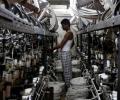
According to Japanese financial services major Nomura, India's manufacturing PMI remained in the expansion zone but suggested some consolidation after the rapid ramp up of activity in December.

What worked for Hyundai in India when so many other auto manufacturers have had to eat humble pie? Pavan Lall finds out.
The headline seasonally adjusted IHS Markit India Manufacturing Purchasing Managers' Index (PMI) fell to 27.4 in April, from 51.8 in March, reflecting the sharpest deterioration in business conditions across the sector since data collection began over 15 years ago. The index slipped into contraction mode, after remaining in the growth territory for 32 consecutive months. In PMI parlance, a print above 50 means expansion, while a score below that denotes contraction.
 © 2026 Rediff.com - Advertise with us - Disclaimer - Privacy Policy - Sitemap - Feedback - About us - Terms of use - Grievances